Avocado
Not listed does not mean safe.
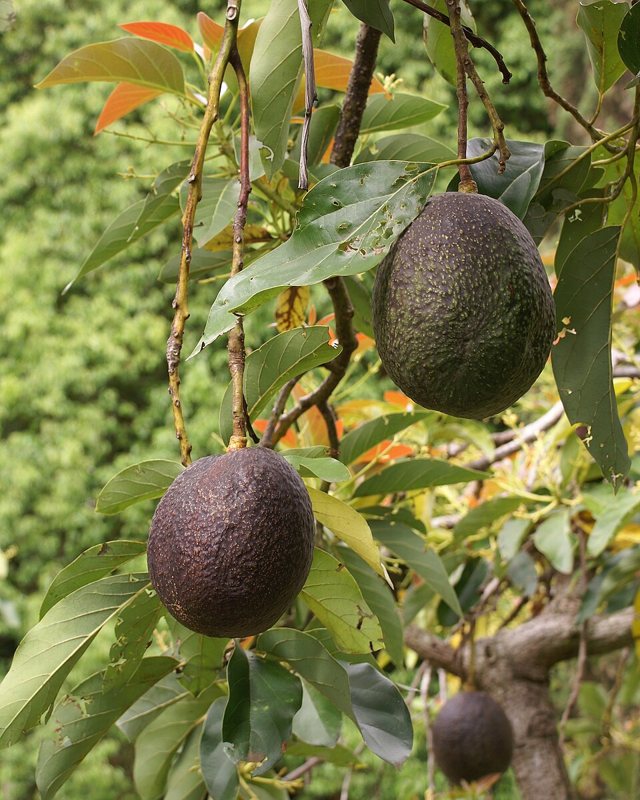
B.navez · CC BY-SA 3.0 · Photo source · shows: Avocado

Persea americana
Also known as: Alligator Pear
Family: Lauraceae · ASPCA plant record
Verdict at a glance
Show all animals
Evidence by animal
| Animal | Verdict | Basis | Plant parts | Sources | Evidence link |
|---|---|---|---|---|---|
| Companion mammals | |||||
| Dogs | Dogs: ! Caution | Merck: relatively resistant; one case report; pit can obstruct | intact pit (obstruction) | Merck Veterinary Manual Veterinary reference | evidence |
| Horses & livestock | |||||
| Horses | Horses: ⚠ Toxic | all above-ground parts (leaves in particular) | Merck Veterinary Manual Veterinary reference ASPCA Toxic and Non-Toxic Plants Poison control | evidence | |
| Goats | Goats: ⚠ Toxic | all above-ground parts (leaves in particular) | Merck Veterinary Manual Veterinary reference | evidence | |
| Chickens & other poultry | Chickens & other poultry: ! Caution | Merck: susceptible, but chickens and turkeys seem more resistant; UC Davis: "poisonous" to chickens (no dose or severity given) | fruit, stems, leaves, seeds (leaves most toxic) | Merck Veterinary Manual Veterinary reference UC Davis Veterinary Medicine University | evidence |
| Small mammals | |||||
| Rabbits | Rabbits: ⚠ Toxic | WHRS Class 1: universal toxin; Peer-reviewed field outbreak report (PMID 30946913); Peer-reviewed review (PMID 42509053) | all above-ground parts (leaves in particular); leaves | Wisconsin House Rabbit Society Rescue/education group Merck Veterinary Manual Veterinary reference | evidence |
| Guinea pigs | Guinea pigs: ⚠ Toxic | Merck: named as susceptible; Oxbow: on the "never feed" list | fruit, stems, leaves, seeds (leaves most toxic) | Merck Veterinary Manual Veterinary reference Oxbow Animal Health Veterinary reference | evidence |
| Rats | Rats: ⚠ Toxic | Merck: named as susceptible | fruit, stems, leaves, seeds (leaves most toxic) | Merck Veterinary Manual Veterinary reference | evidence |
| Mice | Mice: ⚠ Toxic | Merck: named as susceptible | fruit, stems, leaves, seeds (leaves most toxic) | Merck Veterinary Manual Veterinary reference | evidence |
| Birds | |||||
| Pet birds (general) | Pet birds (general): ⚠ Toxic | AAV: listed as toxic to pet birds; VCA: specifically reported harmful in birds | Not specified | Association of Avian Veterinarians Veterinary reference Merck Veterinary Manual Veterinary reference UC Davis Veterinary Medicine University VCA Animal Hospitals Veterinary reference | evidence |
| Parrots (macaws, Amazons, African greys…) | Parrots (macaws, Amazons, African greys…): ⚠ Toxic | Peer-reviewed review (PMID 42509053) | Not specified | evidence | |
| Budgerigars (budgies) | Budgerigars (budgies): ⚠ Toxic | Merck: named as susceptible; Peer-reviewed experiment (PMID 2914792); Peer-reviewed experiment (PMID 1577644) | fruit, stems, leaves, seeds (leaves most toxic); fresh plant material (powdered) | Merck Veterinary Manual Veterinary reference | evidence |
| Cockatiels | Cockatiels: ⚠ Toxic | Merck: named as susceptible | fruit, stems, leaves, seeds (leaves most toxic) | Merck Veterinary Manual Veterinary reference | evidence |
| Canaries | Canaries: ⚠ Toxic | Peer-reviewed experiment (PMID 2914792) | all above-ground parts (leaves in particular) | Merck Veterinary Manual Veterinary reference | evidence |
| Finches | Finches: ⚠ Toxic | VCA: reported toxic to birds (finch guide) | Not specified | VCA Animal Hospitals Veterinary reference | evidence |
| Reptiles | |||||
| Tortoises | Tortoises: ! Caution | Tortoise Trust: listed as toxic, degree uncertain | leaves | Tortoise Trust Specialist charity | evidence |
Source excerpts
Merck Veterinary Manual — Avocado (Persea spp) Toxicosis in Animals — Dogs
veterinary-reference
Merck: relatively resistant; one case report; pit can obstruct · intact pit (obstruction) · Merck says dogs seem relatively resistant but cites one case report of 2 dogs with myocardial damage, and warns that an intact pit can obstruct the gut. ASPCA does not list avocado for dogs.
Although a single case report exists of 2 dogs developing myocardial damage after avocado ingestion, dogs seem relatively resistant compared with other species. In addition, dogs ingesting the intact pit of the avocado fruit can develop foreign body obstruction of the GI tract.
Source checked 2026-10-27 (source updated Sept 2024)
Read original sourceMerck Veterinary Manual — Houseplants and Ornamentals Toxic to Animals — Horses, Rabbits, Canaries, Goats
veterinary-reference
all above-ground parts (leaves in particular) · Merck Veterinary Manual table row: Persea americana
All above-ground parts (leaves in particular) reported toxic to cattle, horses, goats, rabbits, canaries, ostriches, and fish.
Source checked 2026-10-27 (source updated Sept 2024 (full review Nov 2023))
Read original sourceASPCA Toxic and Non-Toxic Plants — Horses
poison-control
Toxic to Horses
Source checked 2026-10-27
Read original sourceWisconsin House Rabbit Society — Classes of Toxic Plants — Rabbits
rescue-education
WHRS Class 1: universal toxin · Wisconsin House Rabbit Society chapter list (G. Flentke, 2012): Class 1 — "Universal species toxins": "usually systemic toxins or local effect toxins of sufficient intensity to cause systemic problems" (list heading: "Do NOT expose rabbits to these plants.").
Avocado
Source checked 2026-10-27
Read original sourceAcute heart failure in rabbits by avocado leaf poisoning — Rabbits
peer-reviewed
Peer-reviewed field outbreak report (PMID 30946913) · leaves · Outbreak in Salta, Argentina; avocado leaves identified in the stomach contents by microhistology.
Fourteen rabbits died of congestive heart failure within 30 h of ingesting fresh avocado leaves from pruned trees.
Source checked 2026-10-27
Read original sourceDietary Intoxications of the Exotic Animal Patient — Rabbits, Parrots (macaws, Amazons, African greys…)
peer-reviewed
Peer-reviewed review (PMID 42509053) · Review article (Vet Clin North Am Exot Anim Pract, 2026); the abstract does not cite individual cases.
Peer-reviewed review (PMID 42509053) · The review says 'psittacines' (the parrot order) without naming species.
Rabbits, psittacines, ostriches, aye-ayes, and fish appear to be sensitive to avocado intoxication, which causes life-threatening cardiotoxicosis.
Source checked 2026-10-27
Read original sourceMerck Veterinary Manual — Avocado (Persea spp) Toxicosis in Animals — Guinea pigs, Rats, Mice, Budgerigars (budgies), Cockatiels
veterinary-reference
Merck: named as susceptible · fruit, stems, leaves, seeds (leaves most toxic) · Merck Veterinary Manual chapter "Avocado (Persea spp) Toxicosis in Animals" names this animal among those susceptible to myocardial necrosis (and, in lactating mammals, sterile mastitis).
Merck: named as susceptible · fruit, stems, leaves, seeds (leaves most toxic) · Merck Veterinary Manual chapter "Avocado (Persea spp) Toxicosis in Animals" names this animal among those susceptible to myocardial necrosis (and, in lactating mammals, sterile mastitis). Experimental detail in the chapter: purified persin caused mastitis in lactating mice at 60–100 mg/kg and myocardial necrosis above 100 mg/kg.
Merck: named as susceptible · fruit, stems, leaves, seeds (leaves most toxic) · Merck Veterinary Manual chapter "Avocado (Persea spp) Toxicosis in Animals" names this animal among those susceptible to myocardial necrosis (and, in lactating mammals, sterile mastitis). Merck notes caged birds seem more susceptible.
Cattle, goats, horses, mice, rabbits, guinea pigs, rats, sheep, budgerigars, canaries, cockatiels, ostriches, chickens, turkeys, lemurs, aye-ayes, and fish are susceptible to these conditions after avocado ingestion.
Source checked 2026-10-27 (source updated Sept 2024)
Read original sourceOxbow Animal Health — Foods Guinea Pigs Should Never Eat — Guinea pigs
veterinary-reference
Oxbow: on the "never feed" list · Oxbow Animal Health "foods guinea pigs should never eat" (veterinary-reviewed article from a pet-food maker, not a poison-control centre).
Avocados contain a compound called persin which can be toxic to guinea pigs.
Source checked 2026-10-27 (source updated September 5, 2025)
Read original sourceAssociation of Avian Veterinarians — Protecting Your Pet Birds From Household Dangers — Pet birds (general)
veterinary-reference
AAV: listed as toxic to pet birds · AAV leaflet "Protecting Your Pet Birds From Household Dangers" (the list "is not exhaustive").
Avocadoes are also toxic to many birds, and can cause the lungs to fill with fluid and the heart to fail.
Source checked 2026-10-27
Read original sourceMerck Veterinary Manual — Houseplants and Ornamentals Toxic to Animals — Pet birds (general)
veterinary-reference
Merck Veterinary Manual table row: Persea americana
In caged birds, clinical signs may be evident within 24 h (usually after ≥ 12 h), with death 1–2 days after exposure.
Source checked 2026-10-27 (source updated Sept 2024 (full review Nov 2023))
Read original sourceUC Davis Veterinary Medicine — When Plants and Animals Don't Mix — Pet birds (general), Chickens & other poultry
university
Source says "exotic pets and pet birds".
UC Davis: "poisonous" to chickens (no dose or severity given) · UC Davis calls avocado "poisonous" to chickens but gives no dose or severity. The Merck Veterinary Manual avocado chapter says chickens and turkeys are susceptible but "seem more resistant" than caged birds, so we show caution rather than toxic. Both quotes are shown.
Avocados are the plants that most commonly result in health problems for exotic pets and pet birds, but they are also poisonous to other species such as chickens.
Source checked 2026-10-27 (source updated June 27, 2025)
Read original sourceVCA Animal Hospitals — Plants That Are Toxic to Birds — Pet birds (general)
veterinary-reference
VCA: specifically reported harmful in birds · VCA: asterisk = "plants that are specifically reported to be harmful in birds".
Avocado*
Source checked 2026-10-27 (source updated Aug 14, 2026)
Read original sourceAvian toxicoses: a review (Frontiers in Veterinary Science, 2025) — Parrots (macaws, Amazons, African greys…)
peer-reviewed
Table 2, "Some plants are toxic to pet birds" (C = clinical report, E = experimental). Basis: clinical report and experimental.
Avocado | Psittaciformes (C,E)
Source checked 2026-10-27
Read original sourceAvocado (Persea americana) intoxication in caged birds — Budgerigars (budgies), Canaries
peer-reviewed
Peer-reviewed experiment (PMID 2914792) · Mashed avocado, 2 varieties, given by feeding cannula. 6 of 8 budgerigars died within 24-47 hours; the 2 control budgerigars were normal. Abstract does not say which plant parts were fed beyond mashed avocado.
Peer-reviewed experiment (PMID 2914792) · 1 of 8 canaries died within 24-47 hours of the first dose; the authors report canaries as less sensitive than budgerigars.
Results indicated that avocados are highly toxic to budgerigars and less toxic to canaries.
Source checked 2026-10-27
Read original sourceEvaluation of selected plants for acute toxicosis in budgerigars — Budgerigars (budgies)
peer-reviewed
Peer-reviewed experiment (PMID 1577644) · fresh plant material (powdered) · Pairs of budgerigars were given powdered fresh plant material by gavage; of 19 plants tested only 6 induced clinical signs of illness. The abstract does not name the other 13 plants, so it supports no safe/non-toxic claim for any plant.
Of the 19 plants tested, only 6 induced clinical signs of illness; these plants included yew, oleander, clematis, avocado, black locust, and Virginia creeper (Taxus media, Nerium oleander, Clematis sp, Persea americana, Robinia pseudoacacia, Parthenocissus quinquefolio).
Source checked 2026-10-27
Read original sourceVCA Animal Hospitals — Feeding Finches — Finches
veterinary-reference
VCA: reported toxic to birds (finch guide) · VCA finch feeding guide: foods "reported to be toxic" to birds. About the food (avocado, onion) as written for birds in general.
Avocado and onions have been reported to be toxic and should never be fed to a bird.
Source checked 2026-10-27
Read original sourceTortoise Trust — Toxic Plants and Tortoises — Tortoises
specialist-charity
Tortoise Trust: listed as toxic, degree uncertain · leaves · Tortoise Trust toxic-plant list (from Highfield 2001): "Some plants on this list may be safely consumed in small or moderate quantities, but may be fatally toxic under certain circumstances or in large doses"; exact degree of toxicity unknown.
Avocado (leaves)
Source checked 2026-10-27
Read original sourceMerck Veterinary Manual — Avocado (Persea spp) Toxicosis in Animals — Chickens & other poultry
veterinary-reference
Merck: susceptible, but chickens and turkeys seem more resistant · fruit, stems, leaves, seeds (leaves most toxic) · Merck lists chickens and turkeys among animals susceptible to avocado myocardial necrosis, but says they "seem more resistant" than caged birds. Shown as caution, not toxic.
Caged birds seem more susceptible to the effects of avocado, whereas chickens and turkeys seem more resistant.
Source checked 2026-10-27 (source updated Sept 2024)
Read original sourceNo evidence collected in this database yet for 8 animals
No evidence collected in this database yet for: Cats, Hamsters, Chinchillas, Ferrets, Lovebirds, Pigeons & doves, Bearded dragons, Iguanas
No supported claim has been collected for these animals. Not listed does not mean safe; do not infer suitability from another species.
Toxic principles
ASPCA, as published: Persin Source
Clinical signs
ASPCA, as published: Respiratory distress, heart failure, edema Source
More from veterinary sources
Last verified (ASPCA record): 2026-10-27. Source access dates and limitations.
Similar plants (same family)
Shared family is not a shared verdict. Check each plant separately.