Bird of Paradise
Not listed does not mean safe.
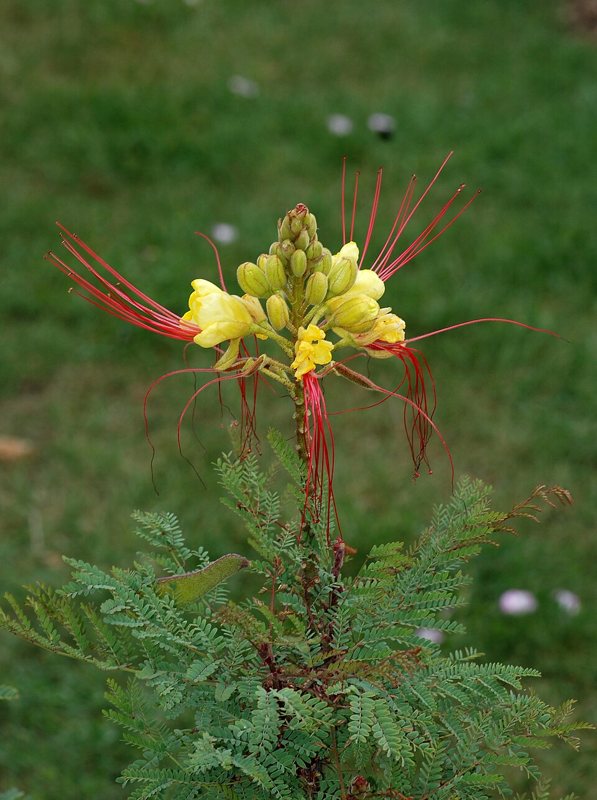
Alvesgaspar · CC BY-SA 3.0 · Photo source · shows: Erythrostemon gilliesii

Caesalpinia gilliesii
Accepted name per Kew POWO/WCVP: Erythrostemon gilliesii (Hook.) Klotzsch (the ASPCA lists this plant as Caesalpinia gilliesii)
Also known as: Peacock Flower, Barbados Pride, Poinciana, Pride of Barbados
Family: Fabaceae (ASPCA lists: Leguminosae) · ASPCA plant record
Verdict at a glance
Evidence by animal
| Animal | Verdict | Basis | Plant parts | Sources | Evidence link |
|---|---|---|---|---|---|
| Companion mammals | |||||
| Cats | Cats: ⚠ Toxic | Not specified | ASPCA Toxic and Non-Toxic Plants Poison control | evidence | |
| Dogs | Dogs: ⚠ Toxic | Not specified | ASPCA Toxic and Non-Toxic Plants Poison control | evidence | |
| Reptiles | |||||
| Tortoises | Tortoises: ! Caution | Tortoise Trust: listed as toxic, degree uncertain | Not specified | Tortoise Trust Specialist charity | evidence |
Source excerpts
ASPCA Toxic and Non-Toxic Plants — Cats, Dogs
poison-control
Toxic to Dogs, Toxic to Cats
Source checked 2026-10-27
Read original sourceTortoise Trust — Toxic Plants and Tortoises — Tortoises
specialist-charity
Tortoise Trust: listed as toxic, degree uncertain · Tortoise Trust toxic-plant list (from Highfield 2001): "Some plants on this list may be safely consumed in small or moderate quantities, but may be fatally toxic under certain circumstances or in large doses"; exact degree of toxicity unknown.
Bird of paradise (Caesalpinia gilliesii)
Source checked 2026-10-27
Read original sourceNo evidence collected in this database yet for 20 animals
No evidence collected in this database yet for: Horses, Rabbits, Guinea pigs, Hamsters, Rats, Mice, Chinchillas, Ferrets, Pet birds (general), Parrots (macaws, Amazons, African greys…), Budgerigars (budgies), Cockatiels, Lovebirds, Canaries, Finches, Pigeons & doves, Bearded dragons, Iguanas, Goats, Chickens & other poultry
No supported claim has been collected for these animals. Not listed does not mean safe; do not infer suitability from another species.
Toxic principles
ASPCA, as published: possibly hydrocyanic acid Source
Clinical signs
ASPCA, as published: Oral irritation, intense burning and irritation of mouth, tongue and lips, excessive drooling, vomiting, diarrhea, difficulty swallowing and incoordination is possible. Deaths in rabbits have been reported. Should not be confused with the less toxic Strelitzia reginae. Source
Last verified (ASPCA record): 2026-10-27. Source access dates and limitations.
Similar plants (same family)
Shared family is not a shared verdict. Check each plant separately.