Foxglove
Not listed does not mean safe.
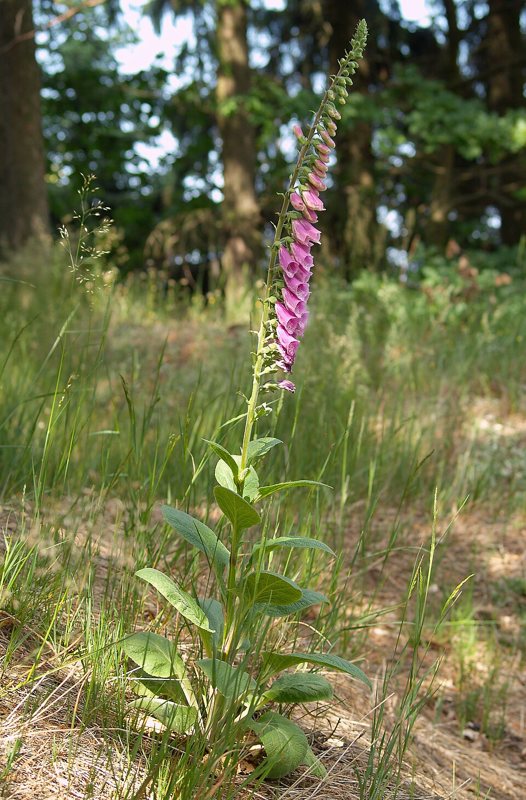
Jörg Hempel · CC BY-SA 3.0 de · Photo source · shows: Digitalis purpurea

Digitalis purpurea
Family: Scrophulariaceae (ASPCA lists: Scrophalariaceae) · ASPCA plant record
Verdict at a glance
Show all animals
Evidence by animal
| Animal | Verdict | Basis | Plant parts | Sources | Evidence link |
|---|---|---|---|---|---|
| Companion mammals | |||||
| Cats | Cats: ⚠ Toxic | Not specified | ASPCA Toxic and Non-Toxic Plants Poison control | evidence | |
| Dogs | Dogs: ⚠ Toxic | Not specified | ASPCA Toxic and Non-Toxic Plants Poison control | evidence | |
| Horses & livestock | |||||
| Horses | Horses: ⚠ Toxic | Not specified | ASPCA Toxic and Non-Toxic Plants Poison control | evidence | |
| Goats | Goats: ⚠ Toxic | Cornell: listed for this species | flowers, leaves, seeds | Cornell University University | evidence |
| Small mammals | |||||
| Rabbits | Rabbits: ⚠ Toxic | rabbit.org: listed as poisonous (not graded); WHRS Class 1: universal toxin | Not specified | House Rabbit Society (rabbit.org) Rescue/education group Wisconsin House Rabbit Society Rescue/education group | evidence |
| Birds | |||||
| Pet birds (general) | Pet birds (general): ⚠ Toxic | AAV: listed as toxic to pet birds; VCA: specifically reported harmful in birds | Not specified | Association of Avian Veterinarians Veterinary reference VCA Animal Hospitals Veterinary reference | evidence |
| Canaries | Canaries: ⚠ Toxic | Peer-reviewed experiment (PMID 1601714) | leaves or fruit | Arai et al. 1992 Peer-reviewed | evidence |
| Reptiles | |||||
| Tortoises | Tortoises: ⚠ Toxic | Tortoise Trust: listed as toxic, credible mortality reports (*) | Not specified | Tortoise Trust Specialist charity | evidence |
Source excerpts
ASPCA Toxic and Non-Toxic Plants — Cats, Dogs, Horses
poison-control
Toxic to Dogs, Toxic to Cats, Toxic to Horses
Source checked 2026-10-27
Read original sourceHouse Rabbit Society (rabbit.org) — Poisonous Plants — Rabbits
rescue-education
rabbit.org: listed as poisonous (not graded) · rabbit.org list "Poisonous Plants" (compiled by the University of Illinois): plants "normally thought to be poisonous"; "others may cause a reaction in some but not in others". Not a graded risk.
Foxglove
Source checked 2026-10-27
Read original sourceWisconsin House Rabbit Society — Classes of Toxic Plants — Rabbits
rescue-education
WHRS Class 1: universal toxin · Wisconsin House Rabbit Society chapter list (G. Flentke, 2012): Class 1 — "Universal species toxins": "usually systemic toxins or local effect toxins of sufficient intensity to cause systemic problems" (list heading: "Do NOT expose rabbits to these plants.").
Foxglove
Source checked 2026-10-27
Read original sourceAssociation of Avian Veterinarians — Protecting Your Pet Birds From Household Dangers — Pet birds (general)
veterinary-reference
AAV: listed as toxic to pet birds · AAV leaflet "Protecting Your Pet Birds From Household Dangers" (the list "is not exhaustive").
Plants known to cause damage to the heart include oleander, yew, lily of the valley, and foxgloves.
Source checked 2026-10-27
Read original sourceAvian toxicoses: a review (Frontiers in Veterinary Science, 2025) — Pet birds (general)
peer-reviewed
Review section "Toxic plants (miscellaneous)" on pet birds.
Many ornamental plants are toxic, such as Coronilla varia, Ericaceae family (for example Rhododendron spp.), Kalanchoe spp., Nerium oleander, Taxus media, Digitalis purpurea, and Euphorbia pulcherima (81).
Source checked 2026-10-27
Read original sourceVCA Animal Hospitals — Plants That Are Toxic to Birds — Pet birds (general)
veterinary-reference
VCA: specifically reported harmful in birds · VCA: asterisk = "plants that are specifically reported to be harmful in birds".
Foxglove*
Source checked 2026-10-27 (source updated Aug 14, 2026)
Read original sourceAvian toxicoses: a review (Frontiers in Veterinary Science, 2025) — Canaries
peer-reviewed
Table 2, "Some plants are toxic to pet birds" (C = clinical report, E = experimental). Basis: experimental.
Foxglove | Canaries (E)
Source checked 2026-10-27
Read original sourceEvaluation of selected plants for their toxic effects in canaries — Canaries
peer-reviewed
Peer-reviewed experiment (PMID 1601714) · leaves or fruit · Leaves or fruit of 14 plants were given by gavage to 15 pairs of canaries. The abstract says 'foxglove' without a species name.
Of the plants tested, 5 (oleander, lupine, foxglove, yew leaves, and dieffenbachia) were considered highly toxic and were associated with acute death of birds.
Source checked 2026-10-27
Read original sourceTortoise Trust — Toxic Plants and Tortoises — Tortoises
specialist-charity
Tortoise Trust: listed as toxic, credible mortality reports (*) · Tortoise Trust toxic-plant list (from Highfield, The Tortoise and Turtle Feeding Manual, 2001): marked * = "credible cases where mortality has been reported following consumption".
Foxglove (digitalis)*
Source checked 2026-10-27
Read original sourceCornell University — Plants Poisonous to Livestock — Goats
university
Cornell: listed for this species · flowers, leaves, seeds · Cornell lists Digitalis purpurea; parts poisonous: flowers, leaves, seeds; poison: cardiac or steroid glycosides.
Digitalis purpurea | Foxglove | cats, cattle, dogs, goats, horses, humans | flowers, leaves, seeds | cardiac or steroid glycosides
Source checked 2026-10-27
Read original sourceNo evidence collected in this database yet for 15 animals
No evidence collected in this database yet for: Guinea pigs, Hamsters, Rats, Mice, Chinchillas, Ferrets, Parrots (macaws, Amazons, African greys…), Budgerigars (budgies), Cockatiels, Lovebirds, Finches, Pigeons & doves, Bearded dragons, Iguanas, Chickens & other poultry
No supported claim has been collected for these animals. Not listed does not mean safe; do not infer suitability from another species.
Toxic principles
ASPCA, as published: Cardiac glycosides Source
Clinical signs
ASPCA, as published: Cardiac arrhythmias, vomiting, diarrhea, weakness, cardiac failure, death. Source
More from veterinary sources
Last verified (ASPCA record): 2026-10-27. Source access dates and limitations.
Similar plants (same family)
Shared family is not a shared verdict. Check each plant separately.